The Mazda CX-5 and Hyundai Tucson compete for the same driveway but sell different promises: one leans driving feel and upscale cabin materials; the other pushes feature density, warranty value, and aggressive styling. Compare them here with editorial scores—then let local comps and a VIN-specific inspection pick the winner.
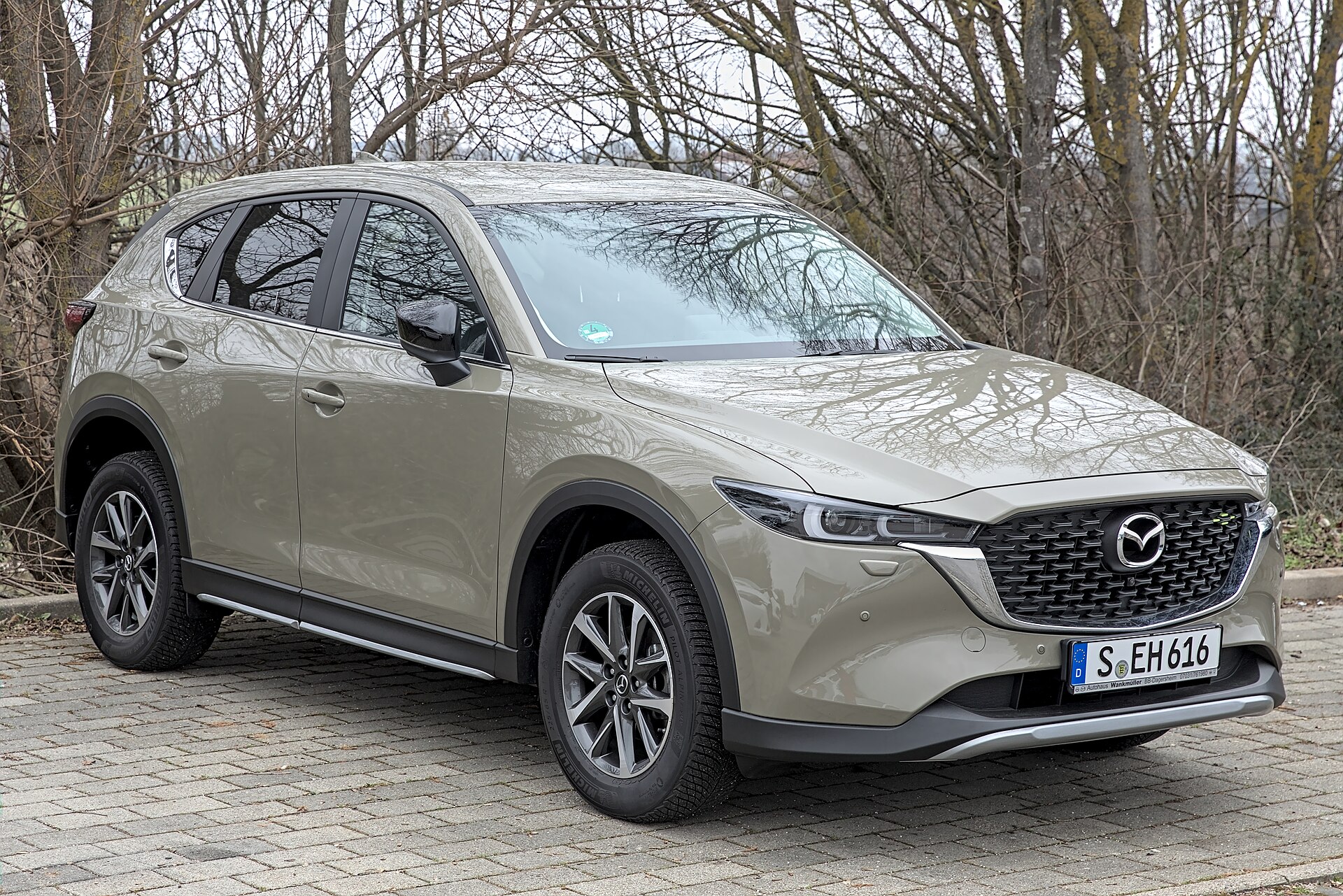
- Verify asking prices on CX-5 and Tucson deal pages—turbo and hybrid trims move faster than base charts suggest.
- CX-5 wins steering and chassis feel in most generations; Tucson wins feature-per-dollar and rear-seat flexibility on many trims.
- Hyundai’s factory warranty can still matter on younger used examples—confirm transferability and in-service date on the Monroney photo.
- Editorial totals are judgment calls, not Deal Scores or live medians.
01Driving feel vs feature sheet
The CX-5 behaves more like a tall hatchback than an appliance—steering weight, brake pedal tuning, and suspension damping are class-leading for drivers who notice. The Tucson prioritizes ride isolation, tech screens, and packaging tricks like rear seat slide/recline on many trims.
Neither advantage appears on a window sticker comparison. Drive both on the same road loop back-to-back. If you delegate driving to a partner who cares only about Apple CarPlay layout, weight their vote accordingly.
02Powertrains and efficiency
Non-turbo CX-5s favor simplicity; turbo trims add punch with more maintenance awareness. Tucson offers efficient naturally aspirated and turbo options plus hybrid variants in recent years—hybrid shoppers should verify brake blending, battery cooling, and fuel-system updates for the exact model year.
AWD penalties apply to both nameplates; normalize drivetrain when comparing comps. Illustrative mpg spreads should come from EPA labels for the exact build, not from a forum signature line.
03Reliability, warranty, and dealer experience
Mazda’s reliability narrative is strong on powertrains but still requires fluid discipline and attention to infotainment glitches on early MY cars. Hyundai’s quality story improved sharply in the 2020s, and remaining factory warranty can be a real dollar value on younger Tucsons—if transferable and documented.
Read the in-service date on the buyer’s order photo. A one-year-old Tucson with thousands of rideshare miles is not “almost new” just because the calendar says so. CX-5s with sunroof drain clogs and premature battery failures appear in owner threads—verify drains and charging system on the PPI.
04Interior space and cargo
Tucson packaging often wins rear-seat adjustability and hidden storage. CX-5 cabins feel more premium in material choice but can feel tighter for rear-facing child seats. Bring the stroller. Measure the cargo opening height if you load dogs or hockey bags weekly.
05Running costs beyond the payment
Illustrative maintenance planning should include oil, filters, brakes, and tires at your annual miles—compact SUVs on 19-inch wheels wear rubber faster than the sedan you traded in. Turbo trims may specify more expensive oil; hybrid trims add brake-fluid intervals that owners forget because pads last longer.
Neither CX-5 nor Tucson is expensive to feed at the pump when you match powertrain to commute, but AWD and turbo combinations move the needle. Normalize those inputs in CarmaDeal before you celebrate a $1,500 asking-price gap.
06Value framing with local comps
Skip invented medians. Filter CX-5 and Tucson listings to your mileage band, then:
- Match turbo to turbo, hybrid to hybrid.
- Price tire age and brake fluid—both models often sit on dealer lots long enough to age rubber.
- Run recalls on the VIN; both brands have had safety campaigns worth verifying.
- Compare warranty transfer paperwork on young Tucsons against out-of-warranty CX-5s with dense service records.
_1X7A0424.jpg)
| Category | CX-5 | Tucson |
|---|---|---|
| Driving feel | 9/10 | 7/10 |
| Interior design | 8/10 | 8/10 |
| Rear seat & cargo | 7/10 | 8/10 |
| Tech & features | 7/10 | 9/10 |
| Warranty value (younger used) | 6/10 | 9/10 |
| Ownership-cost flexibility | 7/10 | 8/10 |
| Editorial total | 44/60 | 49/60 |
06The verdict, by buyer type
- Driver’s SUV: CX-5—prefer non-turbo if you want maximum simplicity.
- Feature budget: Tucson—verify infotainment and ADAS behavior on your phone integration.
- Young used with warranty left: Tucson if transfer docs are clean.
- Keep 10+ years: whichever VIN has the better maintenance story—badge averages will not pay for a skipped transmission service.
07ADAS and infotainment: the hidden test drive
Both brands ship lane-keeping, adaptive cruise, and collision mitigation on many trims—but calibration and false alerts vary. On your test drive, enable every assist feature and note phantom braking, lane wander on faded paint, and wireless CarPlay/Android Auto stability. A screen that reboots at 70 mph is not a minor annoyance; it is a negotiation lever.
Mazda’s earlier infotainment generations lagged smartphone integration; newer CX-5s improved, but verify the model year. Hyundai’s UI is flashier and can hide menus you will need during winter preconditioning on hybrid trims.
08Ownership horizon: who wins at year five vs year ten
Younger Tucsons with transferable warranty can dominate a three-to-five-year hold if the in-service date and mileage limits still cover powertrain components you worry about. CX-5s without warranty but with meticulous dealer service can be the better ten-year car when fluids and timing components were done on schedule.
Neither badge eliminates rust in salt states or turbo carbon on short-trip commuting. Search Community Wisdom for model-year-specific threads after you shortlist two VINs—owner patterns show up long before they become history-report events.
Buyer checklistTurbo, hybrid, and AWD service lines
CX-5 turbo trims benefit from oil-change evidence using the correct specification; short trips without full warm-up can accelerate dilution on any direct-injection engine. Tucson hybrid trims need brake-fluid service on schedule because regen-heavy driving can mask pad wear until rotors corrode.
AWD fluid services appear on both nameplates at different intervals—price one event in your first two years of ownership when comparing seemingly equal asking prices.
Compact SUVs are also family finance products: if you are comparing payment quotes, run both finalists through CarmaDeal with seller type and out-the-door fees so a lower sticker on a Tucson does not hide doc-fee stack on the CX-5.
If you are cross-shopping certified examples, normalize the remaining factory or CPO coverage the same way you normalize mileage and options. A Tucson with a longer unused warranty runway can justify a higher ask than a similarly equipped CX-5 that is about to age out of coverage — but only when the contract terms, deductible, and transfer rules are in writing. Run both VINs through the same inspection and comparable-set process before you decide which premium is real.
Finally, remember that compact SUVs are often three-car-garage compromises: not minivans, not sports cars. The CX-5 rewards drivers who still care about steering; the Tucson rewards households that prioritize rear-seat flexibility and screen real estate. Scorecard totals summarize editorial judgment—they do not replace sitting in both cars with your family and your cargo.
Winter buyers should compare ground clearance, wiper performance, and HVAC output on a cold morning—not on a sunny lot walkaround. AWD badges do not replace tires; both SUVs still need seasonal rubber in snow-belt ZIP codes.
When you narrow to two VINs, run both through CarmaDeal with the same seller type and fee assumptions. A Tucson with transferable warranty may justify a higher normalized price; a CX-5 with fresh brakes and tires may justify a higher price without warranty. The spreadsheet decides; the scorecard informs.
Smell the cabin on a hot day: mildew hints at sunroof drain neglect—a common compact-SUV repair on both brands when owners skip scheduled cleaning.
Photograph every tire sidewall during the test drive; mismatched brands often signal deferred maintenance even when the scorecard favors one nameplate.
Sources and verification notes
- Manufacturer specifications and IIHS/NHTSA ratings for cited model years.
- CarmaDeal deal pages for listing context—verify current comps locally: https://carmadeal.com/
- Editorial scores are CarmaDeal judgment calls, not live market medians or Deal Scores.