Every used-car negotiation eventually produces the same sentence: "It's got a clean CARFAX." But a history report is not a verdict — it's a stack of evidence, and most buyers never read past the summary icons. Here's how to read one the way an analyst would: what each section proves, what it merely suggests, and what it can never tell you.
- "No accidents reported" means no accidents were reported — not that none happened. Roughly half of collision damage never reaches a history provider.
- A title brand (salvage, rebuilt, flood, lemon, not-actual-mileage) is the one finding that no low price or low mileage should ever offset.
- NHTSA estimates 450,000+ vehicles are sold each year with rolled-back odometers — and the rollback is usually visible in the report's own mileage table if you do the math.
- Missing maintenance records don't prove neglect — they prove nothing. Treat evidence density as its own signal.
01The report is evidence, not a verdict
CARFAX and AutoCheck compile events reported to them: DMV title transactions, insurance total-loss filings, some police reports, participating service shops, auctions, and inspection stations. The key word is reported. A cash-paid body-shop repair, an accident settled without insurance, or service at a non-participating independent shop leaves no trace. So read every section as a lawyer would: facts explicitly stated, reasonable inferences from the timeline, and unknowns — three different things the summary icons happily blur together.
Precise language matters. CarmaDeal's history analysis never says "clean history" — it says "no title brand was reported," because that is exactly what the document proves, and nothing more.
02Title brands: the only instant walk-aways
A title brand is a permanent state-issued designation on the vehicle's legal record. The serious ones: salvage (an insurer declared the car a total loss), rebuilt (a salvage car repaired and re-titled), flood and fire damage, lemon buyback (the manufacturer repurchased it under a lemon law), and the odometer brands — not actual mileage and exceeds mechanical limits. These are the findings that no other virtue of the car can offset: not one-owner history, not low mileage, not a bargain price. A cheap car with a flood brand isn't a deal; it's a countdown.
Also watch for title washing: a brand issued in one state, followed quickly by re-titling in another state where the brand doesn't carry over. On the report it looks like rapid state-to-state title movement around the same date as a total-loss or salvage event. The brand may vanish from the current title — the event history is where it survives.
03Do the odometer math yourself
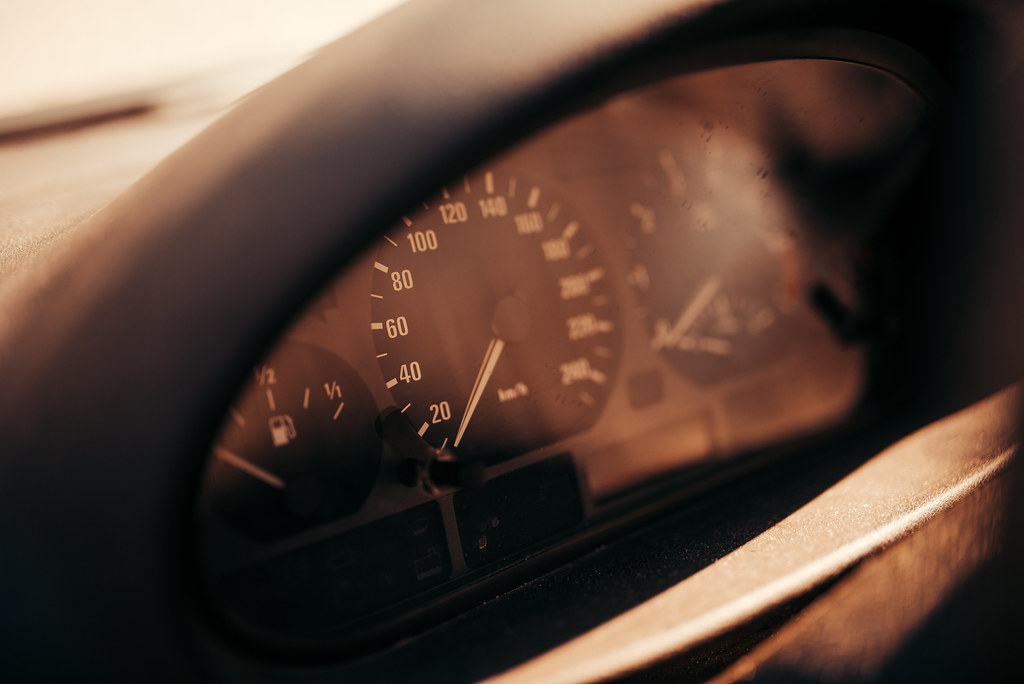
Every report includes a chronological list of odometer readings from title transactions, inspections, and service visits. Most buyers skim it. Don't — this table is where rollbacks die. Walk the readings in date order and check three things:
1. Does the mileage ever go down? Any decrease bigger than a typo (a few hundred miles) is a red flag that overrides everything else on the report. NHTSA estimates more than 450,000 vehicles are sold every year with rolled-back odometers, costing buyers over a billion dollars annually. 2. Are there long silent gaps? Two-plus years with no readings means two-plus years where anything could have happened — including a rollback that resets between snapshots. 3. Does the listing's mileage fit the curve? If the ad says 62,000 miles and the last reported reading two years ago was 78,000, you're done. Check the current odometer against the report before you drive the car.
04Accident entries: decode the severity language
Providers grade damage in careful lawyerly tiers — usually minor, moderate, severe — and the words around the grade matter more than the grade. "Functional damage" means something stopped working. "Structural damage" or "frame damage" means the car's skeleton was involved — treat it like a title brand until a body shop proves otherwise. "Airbag deployed" means the crash was violent enough to fire pyrotechnics, and airbag replacement is exactly the repair that shady rebuilders skip. "Vehicle towed" means it couldn't leave under its own power. For each accident entry, look for a repair record in the following weeks; an airbag deployment with no documented repair afterward is a walk-away until the seller produces the invoice.
05What a missing maintenance record means (and doesn't)
A dense service history — oil changes on schedule, brakes, fluids, tires, all at dated mileages — is genuinely valuable evidence. But the inverse isn't symmetric: a sparse service section doesn't prove neglect, because most independent shops don't report to history providers at all. Classify what you see honestly: documented, partially documented, or simply unverifiable. And don't be fooled by padding — registration renewals, emissions tests, and title updates are administrative noise, not maintenance, no matter how long they make the report look.
06Owners, usage, and geography
Three quiet signals live in the ownership section. Owner count and tenure: five owners in eight years isn't automatically bad, but rapid turnover — especially several owners keeping the car under a year each — suggests a problem each one discovered and passed along. Usage type: rental, fleet, taxi, and livery use means many drivers and hard miles; it's disclosed right in the report and priced into honest listings. Geography: a car that lived in road-salt states rusts from below; a car registered in a flood county the same season as a hurricane deserves a moisture inspection regardless of what the title says. The NICB has repeatedly warned that hundreds of thousands of flood vehicles re-enter the market after major storms — many with paperwork that never caught up.
07The five questions the report can't answer
Ask the seller, in writing: 1. Can you provide service records beyond what the report shows? 2. Has the car had any accident or body repair not shown here? 3. Can I see the physical title before purchase? 4. When were the tires and brakes last replaced, with receipts? 5. Why is it being sold? None of these are on the report — and the way a seller answers is data too. Then book the pre-purchase inspection. A history report plus a $150 PPI beats either one alone, every time.
08Or let the analyzer do this in 20 seconds
Everything above is exactly what CarmaDeal's history report analyzer automates. Upload the seller's CARFAX or AutoCheck PDF (or paste the report text) and deterministic rules — the same report always produces the same result — verify the title chain, walk the odometer table for rollbacks and gaps, grade accident severity, classify the maintenance evidence, and check the report's VIN against your listing. You get a risk level, an evidence-confidence score, the seller questions above pre-written for this specific car, and a print-ready inspection work order — with page citations for every finding. It's a standalone report you can read side by side with your CarmaDeal deal score.
Once the history is decoded, pair it with price: the sample Deal Score report shows how market range and negotiation numbers sit next to risk findings. For year/make/model patterns the paperwork never mentions — chronic electronics, rust belts, repair themes — check Community Wisdom before you book the PPI.