After years of steep increases, car insurance prices are finally falling. The Bureau of Labor Statistics' consumer price index for motor vehicle insurance was 5.1% lower in August 2026 than a year earlier. Repair costs are moving the other way: the CPI for vehicle maintenance and repair was up 5.2% over the same period. Both numbers affect which used car makes sense to buy and how to budget for it.
- BLS CPI, August 2026 vs. August 2025: motor vehicle insurance −5.1%, maintenance and repair +5.2%.
- Insurify's national average full-coverage quote held at about $187 a month through September, but it projects increases in 32 states by year-end.
- Before you buy: get a quote on the exact VIN, shop your current policy, and set aside money for repairs, especially on cars with lots of sensors and expensive parts.
01What the data shows
The BLS series for motor vehicle insurance (not seasonally adjusted) was 894.075 in August 2025 and 848.231 in August 2026, a 5.1% decline. Most of the drop came from May onward. Meanwhile the maintenance and repair series rose from 441.987 to 465.136, up 5.2%.
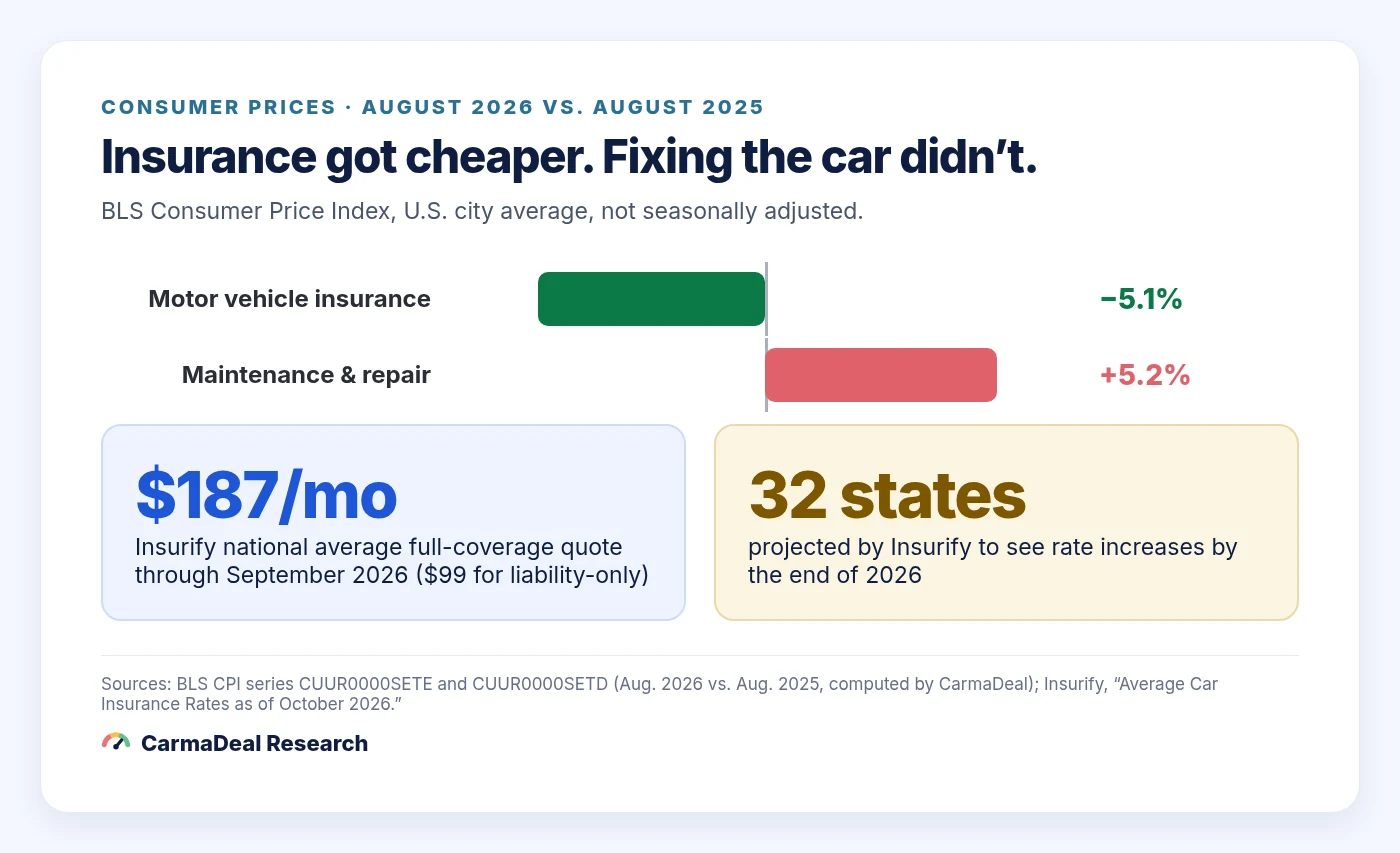
Quote data shows a similar picture. Insurify's October 2026 update says the national average for full coverage held steady at $187 a month, with liability-only at $99. It says rates "have largely remained stable throughout the summer and early fall." It also projects that 32 states will see increases in the final months of 2026, led by Connecticut (4%) and West Virginia (3%), while New Mexico, Arkansas, Minnesota, and Colorado are projected to fall.
Where you live still matters most. Insurify's state averages for full coverage range from $85 a month in New Hampshire to $302 in Maryland.
02Why repair costs matter even when premiums fall
Insurers pay claims with the same parts and labor you pay for out of pocket. Rising repair prices hit you directly when you pay for maintenance or a deductible, and they can push premiums back up later. Insurify's projection of increases in many states is one sign of that risk.
For a used-car buyer, repair costs come in three forms:
- Your deductible. Insurify's full-coverage averages assume $1,000 deductibles for collision and comprehensive. That's what you pay first on every claim.
- Out-of-warranty repairs. Once factory coverage ends, a 5% rise in repair prices adds up on brakes, suspension, and electronics.
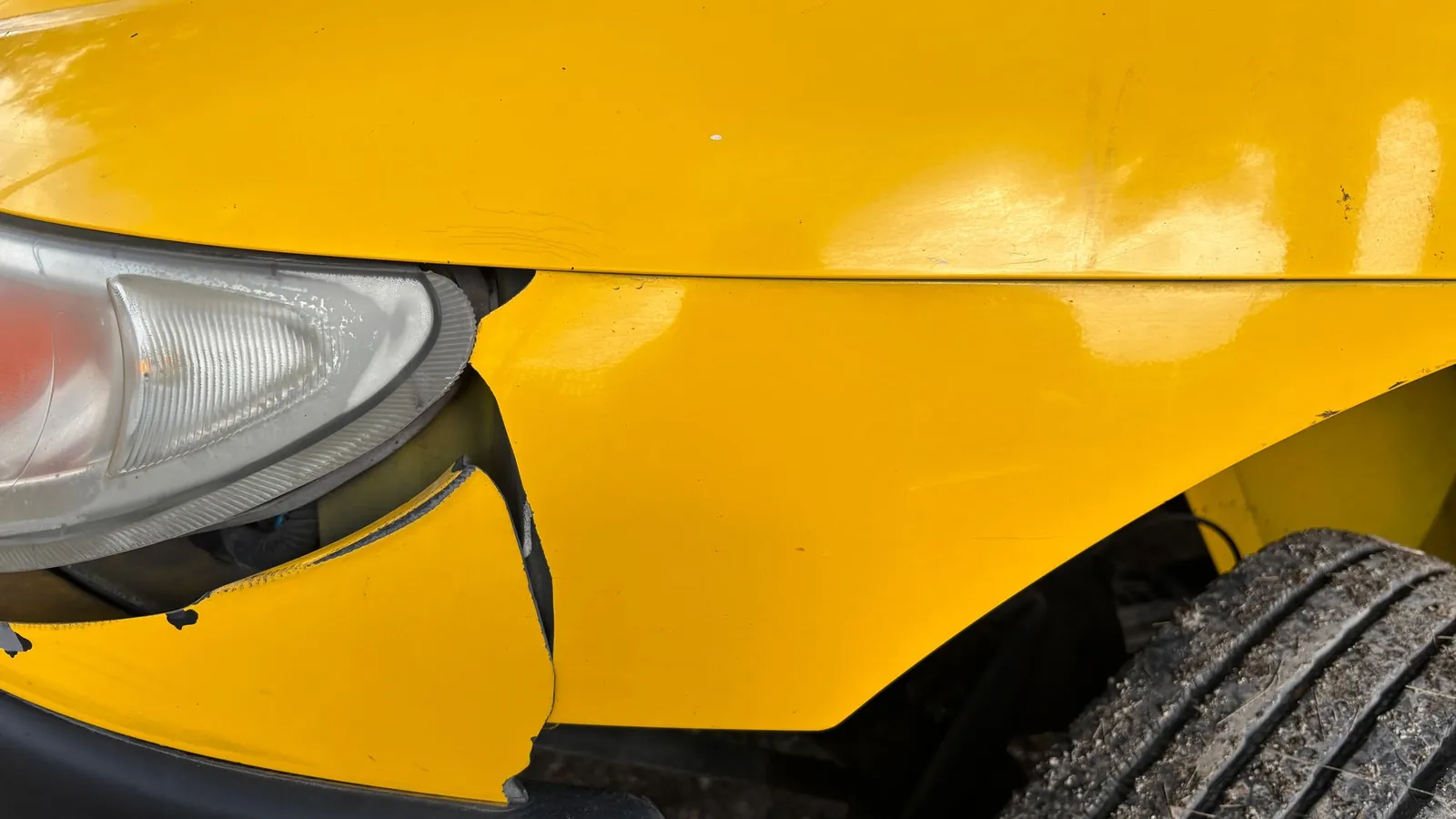
- Small damage that costs more than it looks. Bumpers and mirrors on many newer cars contain cameras, radar, and sensors that may need recalibration after a repair.
03Quote the exact car before you commit
Premiums depend on the specific vehicle, not just the make. Trim, safety equipment, repair costs, and theft rates all go into the price, along with your driving record, ZIP code, and coverage choices. Two cars at the same price can come with very different insurance bills.
- Get the VIN first. Ask the seller for the 17-character VIN before you visit.
- Quote two or three insurers on that VIN, with the same coverage limits and deductibles so the quotes are comparable.
- Re-shop your current policy. Insurify recommends comparing every time your policy renews. With prices falling in many markets, your current insurer may not be the cheapest anymore.
- Decide on your deductible deliberately. A higher deductible lowers the premium but means more cash out of pocket when repair costs are rising. Pick one you could pay tomorrow.
04Picking a car that costs less to own
- Common parts and lots of independent shops. Popular models usually have more aftermarket and used parts available and more mechanics who know them.
- A clean history. Prior structural damage or a branded title can make insurance and repairs more complicated. Check with our History Report Analyzer and see what each title brand means.
- A pre-purchase inspection. With repair prices up 5% in a year, fixing a $900 problem you could have found before buying costs even more. Use our PPI checklist.
- Cheap maintenance. Tires, brakes, and fluids are the bills you'll definitely pay. Our maintenance guide covers the low-cost habits that help.
For coverage basics such as liability limits, gap insurance, and when full coverage makes sense on an older car, see Used Car Insurance Decoded.

05When full coverage stops making sense
On a newer financed car, the lender will require full coverage. Insurify points out that lenders and leasing companies require it. On an older car you own outright, compare the yearly cost of collision and comprehensive with what the insurer would actually pay after your deductible. If an eight-year-old car is worth $7,000 and you carry a $1,000 deductible, the most you'd get back on a total loss is about $6,000. Rising repair prices also mean an older car is more likely to be declared a total loss after a moderate crash. Neither point decides it automatically. It depends on your savings and your risk, but it's worth checking at each renewal.
06Putting it in the budget
Lower insurance prices help, but the car still has to be a good deal. Enter the 17-character VIN on CarmaDeal to see the Deal Score against live local comparables, an itemized out-the-door estimate when you add the advertised price, and recall campaigns for that model (confirm the exact VIN at NHTSA's recall lookup). Title and accident history need a separate check in our History Report Analyzer. Then add your real insurance quote and a repair reserve to get your actual monthly cost.
Sources and verification notes
- U.S. Bureau of Labor Statistics, CPI-U Motor vehicle insurance (CUUR0000SETE) and Motor vehicle maintenance and repair (CUUR0000SETD), not seasonally adjusted. Year-over-year changes computed by CarmaDeal (Aug. 2026 vs. Aug. 2025). September 2026 data was not yet published when this was written.
- Insurify, Average Car Insurance Rates as of October 2026, Oct. 8, 2026. Insurify is a quote-comparison marketplace; averages reflect its quote data and methodology.
- The $40-a-month example is CarmaDeal arithmetic.