On October 13, 2026, AAA's national average for regular gas was $4.34 a gallon. A year earlier it was $3.08. Used-car prices have reacted. Efficient cars are getting more expensive and thirsty ones are getting cheaper. If you're shopping now, you'll be asked to pay more for a hybrid or an EV. Before you do, figure out whether the premium actually pays you back.
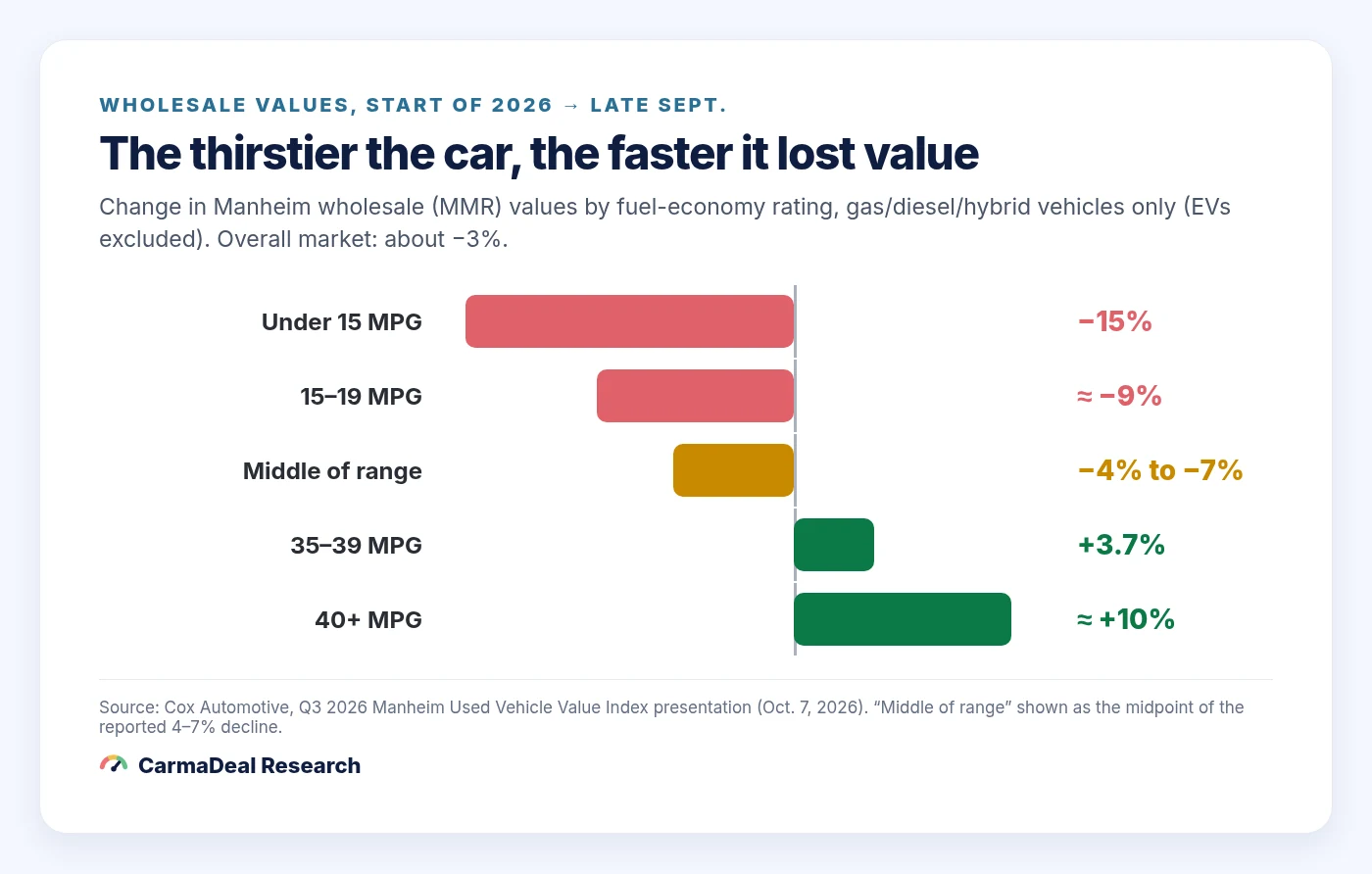
- Cox Automotive found wholesale values sorted by fuel economy this year: vehicles under 15 MPG fell about 15% since early 2026, while 40+ MPG vehicles rose almost 10%.
- Used EV retail prices are about 8% above a year ago (Recurrent, using Cox data), though they've flattened since a June peak.
- Don't pay a premium based on headlines. Use your miles × your local gas price, and compare the yearly savings with the extra you'd pay for the car.
01What the market is doing
Gas prices are now showing up clearly in used-car values. In its Q3 2026 Manheim report, Cox Automotive said wholesale depreciation sped up in the third quarter "amid higher fuel costs, rising interest rates and broader economic pressure." The EV wholesale index was up 4.3% year over year in September, while the non-EV index was down 1.6%. Compact cars were the other segment still above year-ago levels.
The clearest view is in Cox's Q3 presentation, which grouped gas, diesel, and hybrid vehicles by rated fuel economy. Since the first week of 2026, the overall market was down about 3%. Vehicles rated under 15 MPG were down 15%. The 15–19 MPG group was down almost 9%. Vehicles rated 35–39 MPG were up 3.7%, and those at 40 MPG and above were up almost 10%. Cox called the pattern "almost perfectly ordered," with a spread of about 25 percentage points in nine months.
Used EVs are following the same pattern. Recurrent's Q4 2026 report, citing Cox retail data, put the average used-EV listing at $37,832 in July and $37,441 in August, about 8% above August 2025, and "broadly steady" since June. Recurrent also found that more than half of used EVs listed in September were priced under $30,000, as 2023-era leases come back to dealer lots.
02The fuel math that actually matters
A national average doesn't tell you much about your own budget. This formula does:
Annual fuel cost = (miles per year ÷ MPG) × your price per gallon
Here's an illustration at $4.34 a gallon and 12,000 miles a year. Swap in your own numbers.
| Rated MPG | Gallons / year | Fuel cost / year | vs. 22 MPG |
|---|---|---|---|
| 15 MPG | 800 | $3,472 | +$1,105 |
| 22 MPG | 545 | $2,367 | baseline |
| 30 MPG | 400 | $1,736 | −$631 |
| 40 MPG | 300 | $1,302 | −$1,065 |
| 50 MPG | 240 | $1,042 | −$1,325 |
Now compare the premium. Say a used hybrid costs $3,000 more than the gas version of the same model, and gets 40 MPG instead of 30. At these assumptions you'd save about $434 a year on fuel, so it takes roughly seven years to earn back the $3,000. That's before counting any extra interest from borrowing the $3,000. If you drive 20,000 miles a year, or you're replacing a 22 MPG crossover, the payback gets much shorter.
03When the efficiency premium is worth it
- High-mileage drivers. Fuel savings grow with every mile. Long commutes and rideshare driving pay back premiums fastest.
- You're moving down from a big vehicle. Going from 15–19 MPG to 35+ saves far more per mile than going from 30 to 40.
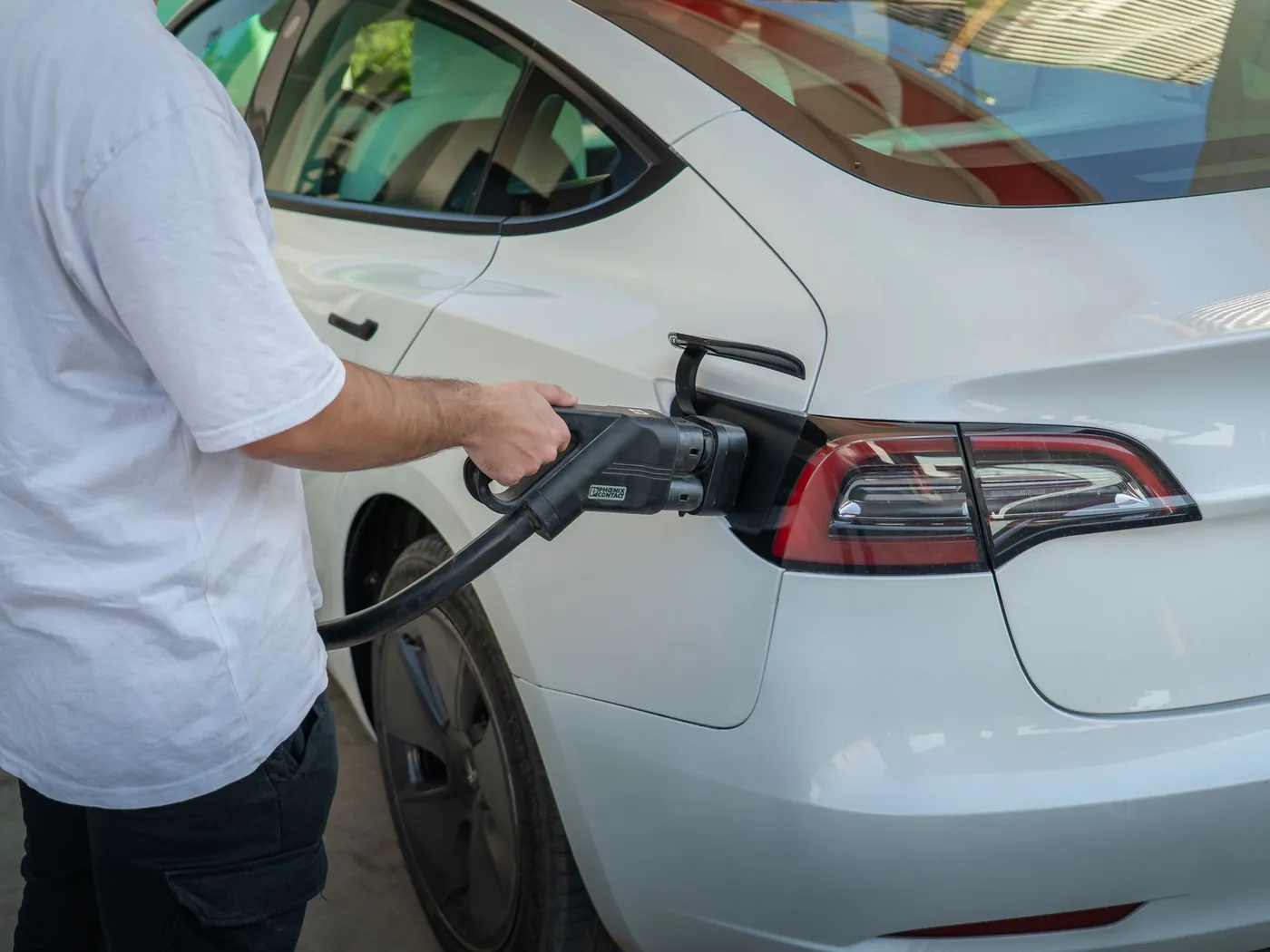
- Home charging for an EV. Recurrent's data shows used EVs selling about as fast as comparable gas cars. The value case is strongest when you can charge cheaply at home. Check battery health before you buy, using our used EV battery guide.
- You keep cars a long time. A seven-year payback only works if you own the car for seven years.
04When it isn't, and where the bargains moved
If you drive under 8,000 miles a year, a big premium for efficiency rarely pays back. On the other side of the market, the vehicles losing value fastest are the ones built for towing, hauling, and space: full-size pickups, large SUVs, and diesels. Cox reported diesel wholesale days' supply at 39 days in September, 27% higher than a year earlier, with diesel near record prices. If you really need a truck or a three-row SUV, this may be the best buying setup in a while. See our breakdown of falling used truck and SUV prices.
Also, nobody knows where gas prices go next. Cox noted that the EV premium "depends heavily on where fuel prices go from here." If prices fall, efficient-car premiums could shrink. Buy for how you'll use the car over the years you own it, not for this month's fuel price.
05Putting it together
Run the fuel math once, then check whether the asking price is reasonable. Entering the 17-character VIN on CarmaDeal shows where that exact car's price sits against live local comparables. That tells you whether you're paying the market's efficiency premium or something on top of it. Add the advertised price, and you'll also get an out-the-door estimate for your ZIP, which you can plug into the payback math.
Sources and verification notes
- AAA, National average gas prices, $4.3413 regular on Oct. 13, 2026; year-ago $3.0821.
- Cox Automotive, Q3 2026 MUVVI press release and September 2026 MUVVI trends, Oct. 7, 2026.
- Cox Automotive, Q3 2026 MUVVI presentation transcript (MPG-band value changes, diesel days' supply, six states above $5).
- Recurrent, Used Electric Car Prices & Market Report, Q4 2026, Sept. 30, 2026.
- Fuel-cost table and payback example are CarmaDeal arithmetic under the stated assumptions.